Tianning Temple is located at No. 1 Luohan Road, Tianning District (near Hongmei Road), to the south of Hongmei Park in Changzhou City, Jiangsu Province. Originally named Guangfu Temple, it was first built during the Zhenguan and Yonghui reigns of the Tang Dynasty. In the first year of Zhenghe in the Northern Song Dynasty (1111 AD), it was renamed to its current name “Tianning Temple”. After 1949, the Changzhou Municipal People’s Government has allocated funds for the renovation and restoration of Tianning Temple on multiple occasions. In 2023, a renovation and maintenance project for the mountain gate (shanmen) and the vegetarian canteen of Tianning Temple was launched.
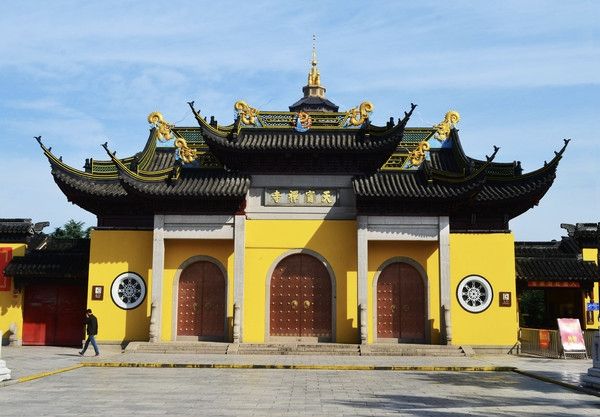
Tianning Temple is characterized by its “Five Grand Elements”: the grand halls, grand Buddha statues, grand bell, grand drum, and grand treasure tripods. The main structures within the temple include the Tianning Pagoda, Heavenly Kings Hall, Mahavira Hall, Jade Buddha Hall, and Three Treasures Hall. Among these, the Tianning Pagoda, completed in 2007, stands at a total height of 153.79 meters with a construction area of 27,000 square meters, making it the tallest Buddhist pagoda in the world [2] [6]. Covering a total area of over 110 mu (approximately 73,333 square meters), the temple complex is symmetrically distributed along the central axis. Its halls, pavilions, and corridors are connected, forming an exquisite architectural masterpiece that integrates the temple and the pagoda.
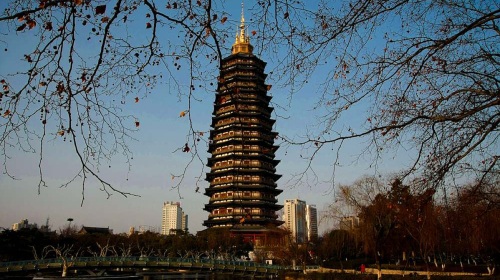
Tianning Pagoda is located within Tianning Chan Monastery in Changzhou City, Jiangsu Province. Its construction began in April 2002. With a height of 153.79 meters, it has 13 floors and a total construction area of 27,000 square meters, and is known as “China’s No.1 Buddhist Pagoda”
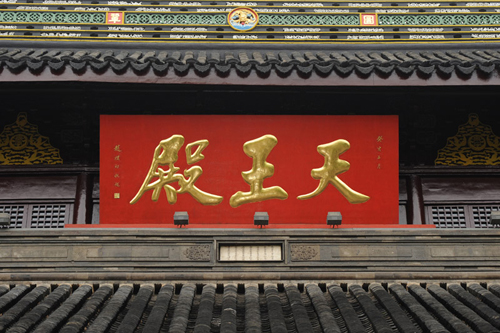
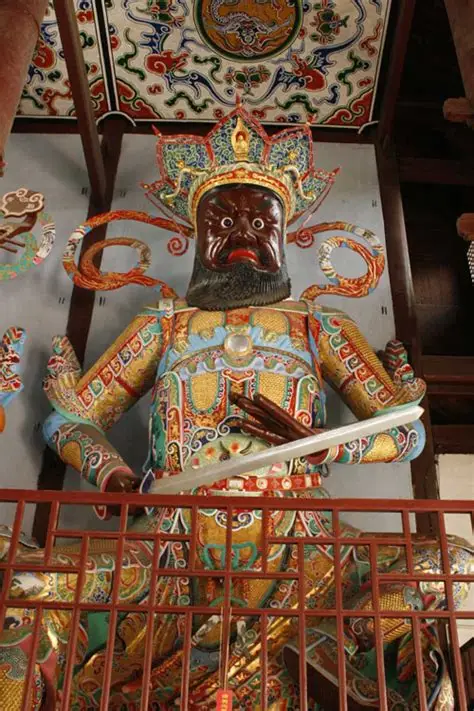
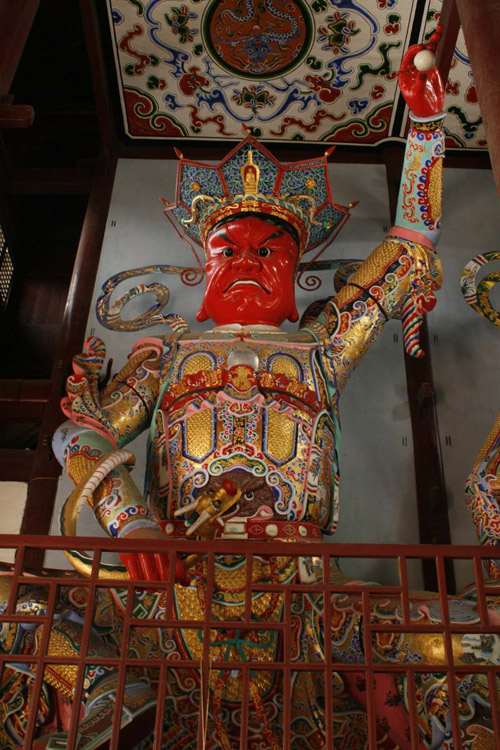
The Heavenly Kings Hall of Tianning Temple in Changzhou is an ancient building with a double-eaved gable-and-hip roof structure. The hall is 24.5 meters wide and approximately 23 meters high. Its dragon-shaped hip ridges are carved and assembled from over 30 pieces of 72-centimeter square bricks produced by the imperial kilns of the Qing Dynasty.
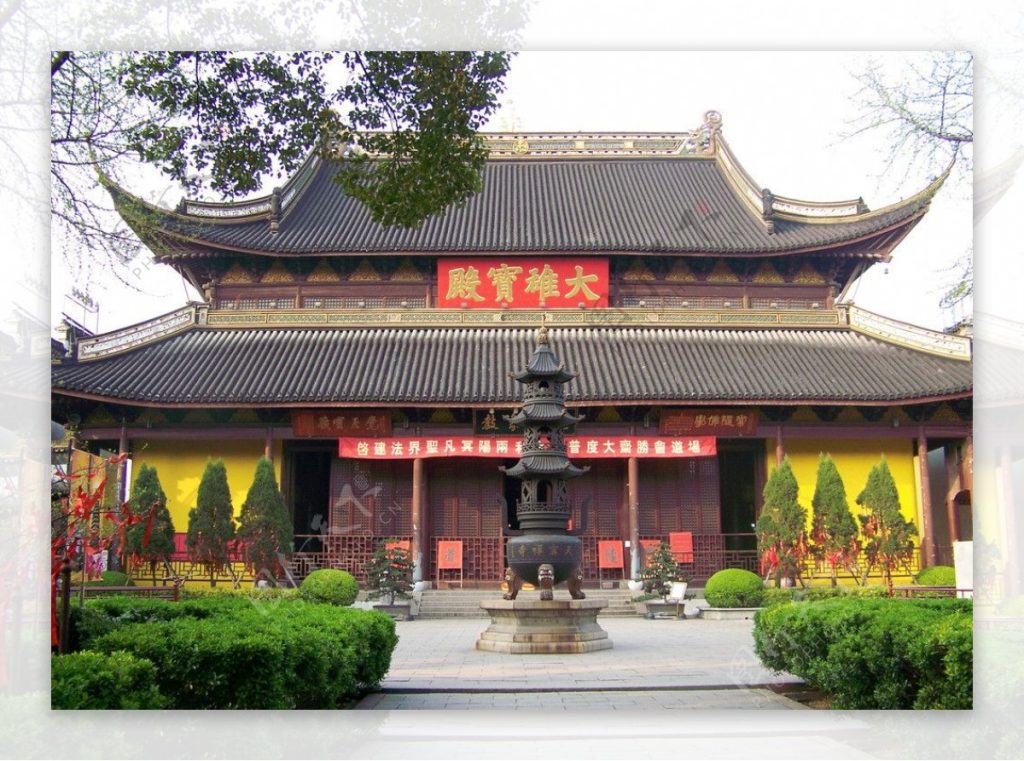
The Mahavira Hall of Tianning Temple is an immovable cultural relic of the Qing Dynasty in Jiangsu Province. Located within Tianning Temple in Changzhou City, it is a building with a double-eaved gable-and-hip roof structure. With a width of 26.4 meters, a height of 29.7 meters, and an area of 1,031 square meters, it is renowned for its grand scale.
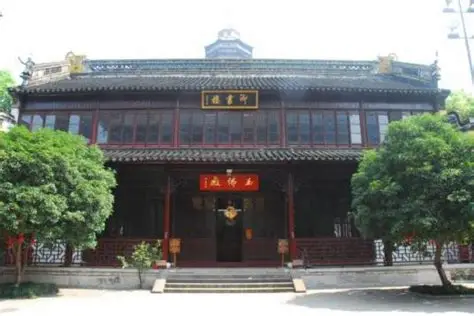
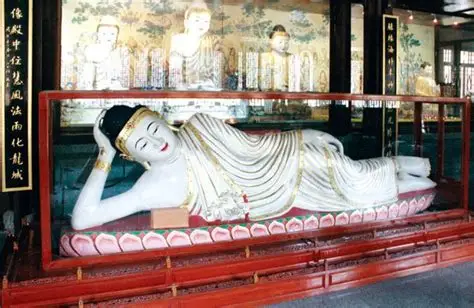
The Jade Buddha Hall of Tianning Temple is a cultural relic from the Qing Dynasty, located in Jiangsu Province. The main objects of worship inside the hall are seven seated jade Buddha statues: the Medicine Buddha for Dispelling Calamities and Extending Life stands on the east side, and the Amitabha Buddha on the west side. There are also three large reclining jade Buddha statues, depicting Sakyamuni Buddha in the “auspicious reclining posture” at the time of his parinirvana, with serene and benevolent facial expressions.
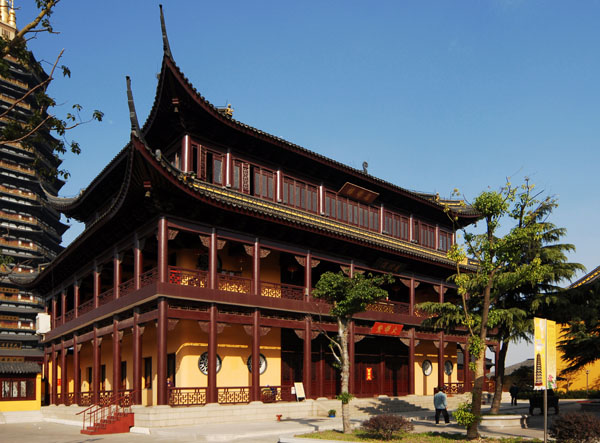
Stepping out of the Jade Buddha Hall, one arrives at the Sanbao Hall, a temple hall that integrates the “Three Treasures” of Buddhism—Buddha, Dharma, and Sangha.
- Buddha: Refers to Sakyamuni, the founder of Buddhism, and also generally denotes all Buddhas or those who have achieved full enlightenment through spiritual practice.
- Dharma: Refers to the teachings and doctrines of Buddhism.
- Sangha: Refers to Buddhist monks and nuns who inherit and propagate the Buddhist teachings.
The Sanbao Hall of Tianning Temple stands 26 meters tall with a construction area of 1,600 square meters. Its upper floor enshrines ten thousand Buddhas surrounding Vairocana Buddha, known as the “Pavilion of Ten Thousand Buddhas”; the middle floor houses the Tripitaka (the complete collection of Buddhist scriptures); the ground floor is a grand meditation hall for monks from all over the world to practice meditation, dedicated to promoting the spiritual tradition of Chan (Zen) Buddhism.
The Sanbao Hall not only retains the distinctive style of ancient architecture but also embodies the grandeur of modern architecture.